How to Descale a Kettle
Chalky flakes in your tea? Descale a kettle with white vinegar or citric acid, rinse it properly and keep limescale from coming back with a few small habits.
- Box code
TPS 10- Added
- Read time
- 4 min read
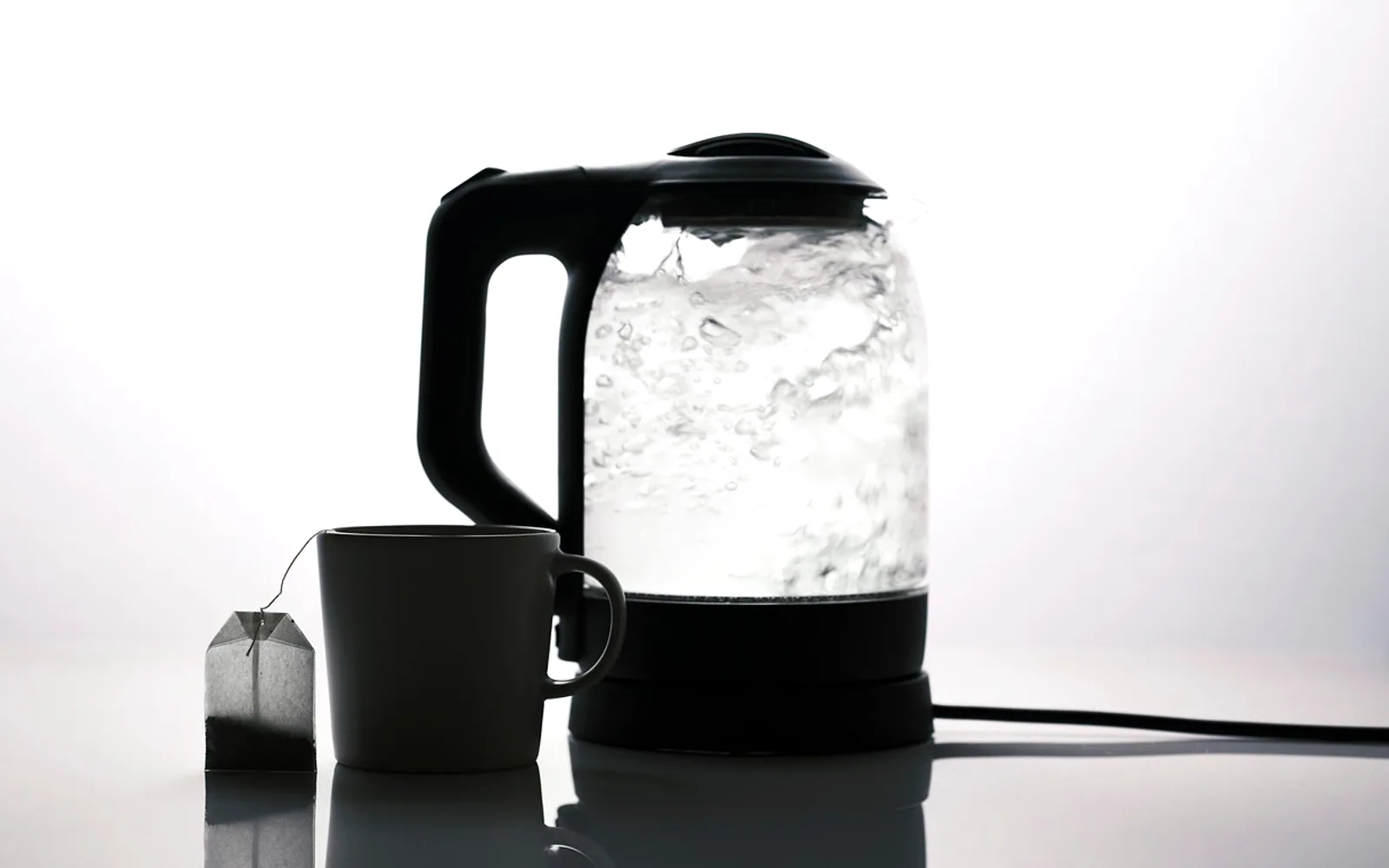
If you live somewhere with hard water, your kettle is quietly growing a coat. First it is a faint white film on the bottom. Then it is a crunchy crust around the element. Then one morning there are little chalky flakes floating in your tea, and the kettle seems louder and slower than it used to be.
That crust is limescale, the mineral leftovers that water leaves behind every time it boils. It is not something to panic about, but it is not something you want in your cup either. The cure is cheap, takes about half an hour of mostly waiting, and needs no scrubbing at all.
Two ways to do it
Limescale dissolves in mild acid, so the two classic options are white vinegar and citric acid. Both work. Pick whichever you have.
| Method | Best for | Downside |
|---|---|---|
| White vinegar | Thick crusts and kettles that have not been descaled in ages | A strong smell that needs a few rinse cycles to clear |
| Citric acid powder | Regular top-ups, with almost no smell | One more thing to buy if it is not in the cupboard |
| Lemon juice | Light scale and a fresher scent | Gentler, so it may need a second round |
The vinegar method
- Unplug and empty. Start with a cold, empty kettle.
- Mix the solution. Fill the kettle about halfway with equal parts white vinegar and water. Make sure the element or the bottom plate is fully covered.
- Bring it to the boil. Plug in, boil once, then switch off and unplug.
- Let it soak. Leave the solution for twenty minutes to an hour. Thicker scale needs longer. You will see it start to soften and flake away.
- Pour it out. Tip the solution down the sink. If any stubborn patches remain, a soft brush or the rough side of a sponge (on the outside of the element only, never on electrical parts) usually lifts them now.
- Rinse, boil, discard. Fill with fresh water, boil, pour it away. Do this two or three times until there is no trace of vinegar smell.
The citric acid method
Dissolve a tablespoon or two of citric acid powder in water, enough to cover the bottom of the kettle, and follow exactly the same steps: boil, soak, pour, then rinse and boil fresh water a couple of times. The results are similar, and your kitchen will not smell like a chip shop for the rest of the afternoon.
If your kettle has a removable mesh filter in the spout, pop it out and soak it in a small bowl of the same solution while the kettle does its thing. Rinse well before clicking it back in.
What not to do
- Do not put an electric kettle in water or under a running tap with its base attached. Keep the base and the plug dry at all times.
- Do not use bleach. It does nothing for limescale anyway. Never mix bleach with vinegar, ammonia or other cleaners, as the fumes are harmful.
- Do not reach for harsh scourers on the inside of the kettle. They scratch the surface and give the scale even more to grip.
- Do not skip the rinse boils. Nobody wants vinegar tea.
Using a shop-bought descaler instead? Follow the instructions on the pack exactly, and do not combine it with vinegar or citric acid. One product at a time is the rule.
How often should you descale?
It depends almost entirely on your water. In hard-water areas, a quick descale every month or so keeps things under control. With softer water you might only need to do it a few times a year. A good rule of thumb: when you can see a white film forming on the bottom, it is time. Small, regular descales are much easier than tackling a thick crust once a year.
Little habits that slow the scale down
- Boil only the water you need, so there is less left behind to evaporate.
- Empty the kettle at the end of the day instead of letting water sit overnight.
- Give it a quick rinse every few days.
- If you already use a water filter jug, fill the kettle from that.
- Wipe the outside with a damp cloth to keep the whole thing looking as fresh as it now tastes.
The same vinegar-and-steam logic works wonders elsewhere in the kitchen. Our guide on how to clean a microwave in ten minutes uses the leftovers from this job. And if the counter under your kettle could use a glow-up too, have a look at our under-cabinet lighting ideas.
Put the kettle on. It will taste better than it has in months.