Taormina – A Comprehensive Look at Its Past and Present
Taormina through the ages: Greek and Roman roots, medieval lanes, the Grand Tour era and today's festivals, with practical tips for planning a visit to Sicily.
- Bin
- Travel
- Box code
TRV 01- Added
- Read time
- 2 min read
Perched on a terrace of Monte Tauro, with the Ionian Sea below and the smoking cone of Etna on the horizon, Taormina has a setting that seems almost staged. Generations of visitors have agreed. Yet behind the postcard views lies a town shaped by many hands: Greek settlers, Roman engineers, Byzantine and Arab rulers, Norman kings and, much later, painters, writers and travellers who turned it into one of Sicily's best-known destinations.
Greek and Roman foundations
The hilltop drew early settlers for good reasons: it was easy to defend and looked out over coastal trade routes. Greek colonists built the first substantial town, and the Romans later expanded it. The most famous survivor of these eras is the ancient theatre, carved into the slope so that the audience faced both the stage and a sweeping view of the coast and volcano. The Romans adapted it for their own spectacles, and its weathered brick and stone still frame that panorama today.
Medieval layers
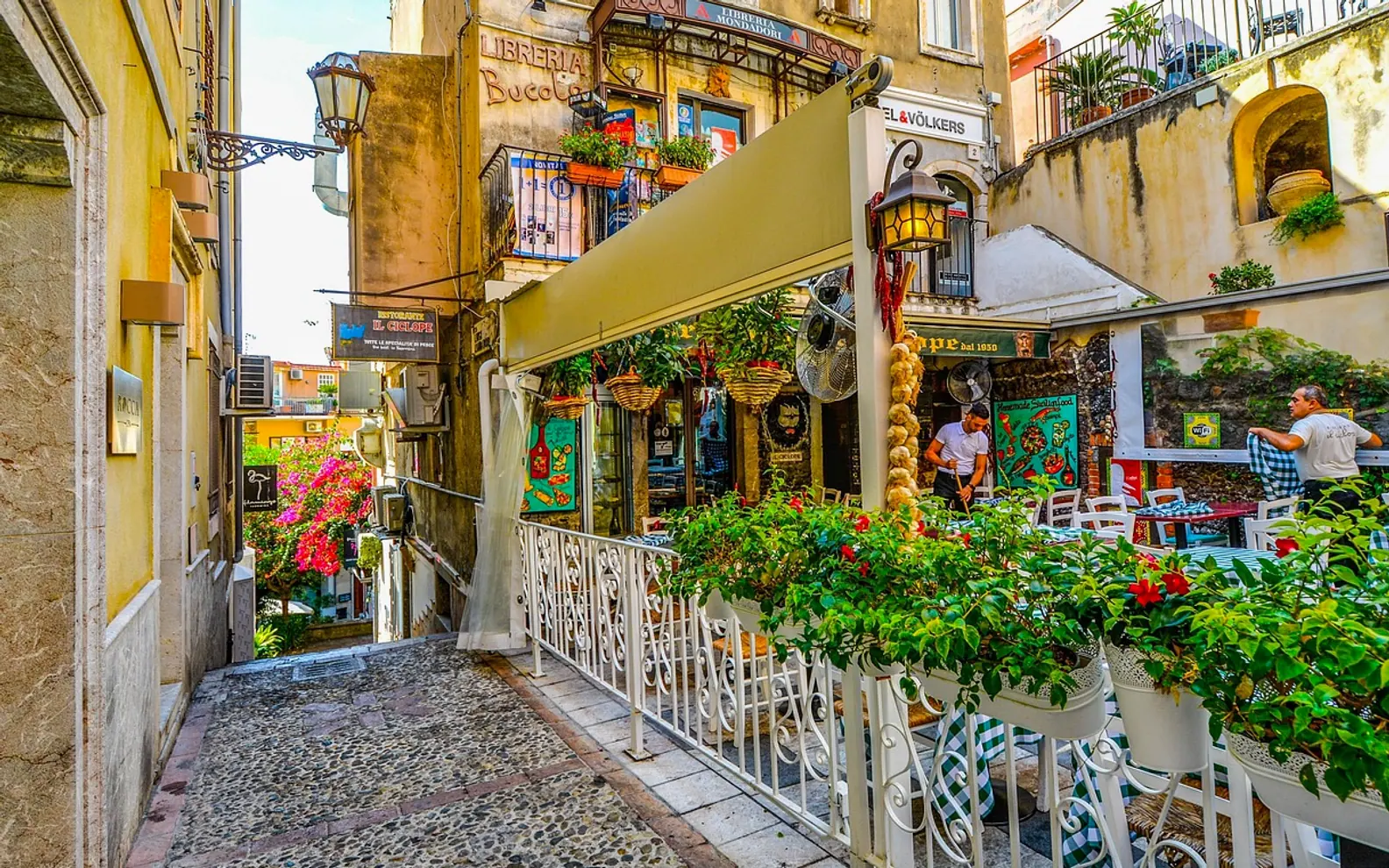
As power in Sicily changed hands, Taormina absorbed each new influence. Narrow lanes, stepped alleys and fortified walls date from this long middle period, as do churches and palazzi that mix Gothic arches with details inherited from Arab and Norman builders. Walking the main street between the old town gates, you pass through these layers one doorway at a time, often without noticing where one century ends and another begins.
From Grand Tour stop to holiday favourite
From the eighteenth century onwards, northern European travellers on the Grand Tour began to include Taormina in their itineraries. Artists, photographers and writers followed, drawn by the light and the views, and the town grew into a winter retreat and later a summer resort. Hotels with sea-facing terraces, public gardens and elegant cafés arrived with them, giving the town much of the character visitors recognise today.
Taormina today
The modern town balances heritage and hospitality. The ancient theatre hosts concerts, opera and film events in the warmer months, creating evenings that few venues anywhere can match. Boutiques, ceramic workshops and pastry shops line the main thoroughfare, while viewpoints such as the main piazza's terrace fill with people at sunset. Below the cliffs, the small island of Isola Bella and the coves along the shore offer swimming and boat trips.
Food is part of the appeal: granita for breakfast, arancini at lunch, fresh fish and local wines from the slopes of Etna in the evening.
Planning a visit
- Spring and early autumn bring mild weather and fewer crowds than midsummer.
- The old town is compact and best explored on foot; comfortable shoes help with the slopes and steps.
- Cars are restricted in the centre, so use designated car parks or arrive by bus or train from Catania or Messina.
- A cable car links the town with the beaches below.
- Start early at the theatre to enjoy it before tour groups arrive.
For deeper planning, from where to stay to which sights deserve extra time, the guide at Sicilianmagpie Taormina gathers practical tips and background on the town's highlights in one place. However you plan it, Taormina rewards those who linger, letting past and present unfold slowly along its sunlit lanes.